2008-09-20

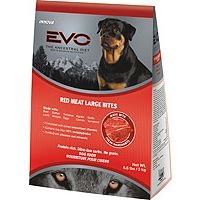
Innova EVO Red Meat Large Bite Dry Dog Food

Innova EVO Red Meat Large Bite Dry Dog Food The EVO line of pet foods have been specially designed to provide all the key nutritional benefits received from the feeding of raw food diets but with the benefits of 21st Century nutritional research. EVO Red Meat Large Bites Dry Dog Food is made from 4 alternative sources of red meat for unparalleled taste and nutrition. Only the highest quality beef, lamb, buffalo and venison - including the meat, cartilage, fat, bone and connective tissue - are used in the making of EVO Red Meat. Whole fruits and vegetables are added to supply important, health promoting nutrients that dogs would find foraging for food. Live, naturally occurring microorganisms are then gently sprayed on after the cooling process.

Ingredients: Beef, Lamb Meal, Potatoes, Egg, Sunflower Oil, Buffalo, Lamb, Venison, Beef Cartilage, Herring Oil, Natural Flavors, Apples, Carrots, Tomatoes, Alfalfa Sprouts, Garlic, Cottage Cheese, Potassium Chloride, Vitamins/Minerals, Ascorbic Acid, Dried Chicory Root, Direct-Fed Microbials, Vitamin E Supplement, Lecithin, Rosemary Extract.

How To Improve Your Dog Health?

As a dog owner, you will agree that your loving dog is your
loyal and reliable friend. You treat him like your own son, make
a nice and comfortable dog house for him, buy the delicious dog
food for him and walk with him happily in the park.

He has become your best companion. You wish he grows and stays
healthy all the time. If anything happened to him, definitely
you would be devastated. You know that one day he will leave you
when he is getting older. However, just imagine how would you
feel if he died at his young age? You would be sad and regret
why you could not prevent this from happening.

In this case, you have to help your friend to live longer. Your
main concern is his health. You should help him to prevent from
suffering diabetes, obesity, allergy, arthritis, dry skin and
food poisoning.

How can you help your friend? Working closely with your
veterinarian is one of the solutions. Alternatively, it will be
a good idea if you follow the guidance from the experts in this
field. These experts have worked out their unique solutions how
to improve the dog’s health after many years of research. On
top of that, their findings will open your eyes to some very
incredible and sometimes unbelievable information why your dog
is at a much higher risk of dying prematurely.

If you love your dog, care about his health, I suggest that you
follow the guidance from the experts before it is too late for
your best friend. You can read about their guidance and
solutions at my
site.


About the author:
I have studied the topic of dog's health for about 10 years. My
goal is to help the dog owners to have better understanding of
their dog's health problem and how can they overcome this
problem.

2008-09-17

Tips For Frustrated Dog Owners

everything that you need to know about getting your dog to
actually listen to you in my free dog training
newsletter
.

Dog training is not really that hard.
You have to remember that a dog only wants to please you. The
problem is getting your dog to understand what it is that you
want from him or her.

I would like to share with you
today a few important dog tips, these are things that helped me
along the path of training my furry companion:

1)
Don't Give Up Because of a Few Frustrations: Dog training is not
easy, and not something that your dog will magically learn
overnight. It is extremely important that you keep this in mind
and not give up when things don't magically fall into place
right away

2) Praising Your Dog: Praising your dog
for positive behaviors is all well and good, but I have found
that I get the best results when I include actual food treats as
well. Food really motivates my dog, and would probably motivate
yours too.

3) Stay Away From Negative Reinforcement:
If you hit your dog when they do something wrong, the only
education you are going to give them is that they should be
afraid of you. Please focus instead on praising when something
good is accomplished.

4) Make Use of Body Language
When Training: Dogs actually can read body language faster than
they hear commands. A good way to utilize this is by pairing
each command with a certain movement of your arm or hand. This
tip really worked for me.

Training a dog is a
wonderful experience, and does not need to be frustrating. I
hope you will keep these tips in mind when you start training
your dog. Good luck!

Learn everything that you need
to know about getting your dog to actually listen to you in my
free dog training
newsletter
.

Latest article on website: Dog
Crate Training
.

About the author:
James Jones writes regularly about pets related topics. I hope
you enjoy this article.

Prevention & Treatment Of Pet Car Sickness

Motion sickness is common in both dogs and cats, however most
pet owners will readily agree that cats are the most prone to
becoming violently ill while in a vehicle. Most cats will have
some reaction to travel that can include howling, meowing,
foaming at the mouth, vomiting and turning into nervous wrecks
at the sight of the carrier and the car. Dogs, as a whole, tend
to be more accepting of car travel and typically learn to adjust
very well to traveling, even learning what the jingle of keys
means. It is possible that cats can learn to enjoy being in a
car, however most cat owners don't usually worry if the cat
doesn't travel well as they typically are only in the vehicle
when they are on the way to the vets.

One of the most important things to keep in mind is that puppies
and kittens are the easiest to desensitize to being in a car, so
the earlier you start and the more positive you make the first
few car trips the more likely your pet will accept and even look
forward to those outings. Get your pet, either puppy or kitten,
used to getting into the car. With the car parked safely, hold
the little one on your lap in the passenger seat or back seat,
give a few treats and lots of praise and attention. Don't even
have the car going at first, just get them used to the physical
aspects of the vehicle. When they are comfortable with that,
take very short trips, even just around the block, providing
lots of treats and praise for just getting into the vehicle and
remaining in it while you go around the block. Always have
someone in the vehicle with you to hold and manage the puppy or
kitten while you are driving, don't try to do it on your own.
With puppies or dogs you can also make the park, beach or
countryside a short stop on the trip, building in some exercise
and a reward the dog is sure to enjoy.

Always make sure that before you put a puppy or a kitten in the
vehicle they have had a chance to go to the bathroom. If you are
scheduling the car rides, make sure they are at least one hour
after eating and after the dog or kitten has eliminated. In
addition don't allow the puppy or kitten to drink immediately
before getting into the car, rather try to have them on an empty
stomach to prevent any messes.

The puppy, kitten or adult dog or cat should always be in some
type of a safety restraint while in the vehicle. This means a
crate or seat belt, but never just loose in the vehicle. Dogs or
cats that are motion sick or anxious will naturally try to crawl
under the driver's legs or get up on their lap, posing a serious
distraction and a potential accident in the making.

If you have tried everything discussed above and your dog or cat
is still really stressed in the vehicle or seems to be sick
while traveling, talk to your vet. There are some prescriptions
medications that will help to relieve the anxiety by sedating
the pet, which can help them overcome their fear. In addition
herbal remedies are now available on the market if you don't
want to use medications. Like all non-prescription treatments
they are largely unregulated and may or may not be effective for
your pet.

About the author:
Haley Thomas is an animal lover and communicator and an editor
for www.TravelingPetGear.com - a resource for stylish gear and
information for pets on-the-go, including pet strollers, car
seats, totes, and ramps.

2008-09-15

Dog Digs Tan

Dog Digs Tan

GoGo XLarge Soft Crate 48L x 3225W x385H Tan by GoGo Pet Products

Folds down for easy transport. Complete with carrying handle. The GoGo Soft Crate is made from heavy duty water resistent canvas material with 1000D reinforced canvas corners. The bottom is made with a water resistent faux leather. The frame is made with a durable powdercoated tube frame that is easy to fold. Great for indoor or outdoor use. The GoGo Soft Crate is the absolute safest crate available.

Heated Sleeper For Your Cherished Home Pet

pet beds aren't just an indulgence - they're often a
necessity, particularly for old dogs with sore joints or
arthritis, whelping puppies or animals that are sleeping
outside, in a basement or garage.

There are three specific styles of electric pet beds. These are
mats, insert warmers and complete, full-sized heated beds. To
learn more about each kind of bed, keep reading.

Heating Mats for Pet Beds

Pet owners love heated mats because they're versatile. Whether
you want to position them in a kennel, slap them on the bottom
of a dog house or just lay one over a favorite sleeping surface,
you can do it. They're also flexible for size, meaning they can
fit different sizes of animals.

Before you use a heated pet mat outside, make sure it's
certified for outdoor use. So, if you're planning to use your
pet mat in a damp garage or dog house, look for one that's made
with waterproof plastic and has an outdoor-graded power cord.
Outdoor models typically come with fleece covers, which are
fine. Just make sure you wash and dry them if they get wet or
soiled.

Pet Bed Warmer Inserts

A pet bed warmer is great for pets that like to move around. The
small insert can be moved from one bed to another. And because
it's small, it uses a lot less power than a full-sized heated
pet bed.

Pet bed warmers are small and portable, but that also means they
don't hold up well under heavy conditions. So, if you need a
warmer for the outdoor dog house or a cold basement, you may
want to invest in a heavy-grade, heated mat.

Before you buy a pet bed warmer, make sure it has a temperature
control - you want to be able to adjust the warmth so that it
doesn't get too hot. Also, look for one that can handle a little
scratching and biting.

Full Heated Pet Beds

A full-sized heated bed is the right choice if your pet likes a
cupped bed, typically referred to as a "snuggle bed." They're
sold in a range of styles and grades, depending on the size of
your animal and whether it's staying outside or indoors.

Obviously, if you're buying a heated bed to keep your Chinese
Crested Dog warm at night or you're buying one to soothe your
Great Dane's arthritis, you'd size your snuggle bed accordingly.

When it comes to purchasing heated pet beds, no one model is
better than the other. If you're looking for small and portable,
opt for the insert. On the other hand, if you prefer durability
and power, go for the mat. And if you just need a basic bed with
a little bit of added warmth, then choose the full-sized bed.

Remember, your beloved pet has needs for warmth in cold, damp
places much like people. A heated mat or bed is really a small
cost to provide a little extra comfort.

About the author:
For helpful information about pet supplies, please visit
petsuppliestips.com, a popular site about needs for your beloved
pet, such as chea
p dog crates
,
health care for pets
, and many more!

2008-09-14

Pet Travel: Packing For Your Dog

for your dog may seem a bit eccentric and, well, let's
face it, a bit over the top, however it really can make the
difference between a stressful and frustrating vacation or trip
and a really enjoyable experience. Although some dogs are happy
jumping in the car and heading out on the road with just their
collar and a leash, most dogs are much more comfortable when
they have some familiar items around them. In turn, the more
comfortable and relaxed your dog is the better the trip will be
for everyone. Taking a bit of time to pack your dog's travel
gear is just part of being the great owner and companion to your
pet you always wanted to be.

Deciding what gear your dog will need on the trip is largely a
function of where you are going and what you are planning to do
when you get there. Of course you will need the basic leash and
collar or harness, but you may also want to consider some
additional items such as a retractable leash or an extra long
leash or lunge line to allow your pet to exercise and roam a bit
while still staying under control. Remember you are going to be
in an unfamiliar place and even the best behaved and trained dog
may get the urge to explore, developing selective hearing
regarding your increasingly frantic calls to return. A
retractable leash for smaller to medium sized dogs is great
option to allow space and freedom while still having control of
the dog. For larger, heavier and stronger breeds a horse lunge
line is an inexpensive option for a long leash plus they come in
a wide assortment of colors and patterns.

If you have a short haired breed or a small dog and you are
taking a winter holiday to enjoy the snowy weather, packing some
dog sweaters and even dog booties may be important to protect
your pet from the cold. This is especially important if your dog
is used to being indoors most of the time or if you live in a
year round warm climate. If you want to stay conservative there
are lots of basic sweaters and heavier dog shirts and sweat
suits available at pet store or online. For those that have more
of a fashion flair, specialty dog boutiques and online stores
offer endless outdoor gear options.

A small, well equipped first aid kit for your dog is very
important. Your vet may sell pre-packaged pet first aid kits
that will typically include bandages, gauze, disinfectant,
antibacterial spray, tweezers, scissors as well as any
medication that your pet is currently taking. If your pet is on
medications be sure you have enough to provide the medication as
per the prescription for the duration of your trip.

Treats and toys should also be included in your pet packing
project and although you don't need to bring all the favorite
toys a few of your dog's top toys should be brought on the trip.
It is always a good idea to pack treats in several zip lock or
sealed bags or containers so that you can easily grab a small
bag to take on a walk or just to hand out a few treats
throughout the day. If your dog has a specialty food that is
difficult to find always pack enough for the trip if at all
possible. If the dog eats a readily available commercial brand
it is still a good idea to bring enough for a couple of meals,
just in case you have difficulty in getting to a store during
business hours.

A great way to pack your doggy gear is in a backpack that is
lightweight, waterproof and easy to carry. Some dog carriers and
crates also have cubby holes and spaces for packing, which is
terrific if space saving is important.

About the author:
Haley Thomas is an animal lover and communicator and an editor
for www.TravelingPetGear.com - a resource for stylish gear and
information for pets on-the-go including pet strollers, car
seats, seat belts, totes, tents, and life jackets.

How to Choose Pet Supplies for Your New Dog

So you're ready to get a puppy or dog, but just aren't sure how
to prepare. First, think of all the pet supplies you'll need to
have already on hand before your new pet arrives. Some things
are needful now and some pet supplies can be purchased later on.

A new puppy will need a warm, cozy place to sleep that's
enclosed so he can't escape while you're away or sleeping. You
can buy a puppy crate (which is great for housebreaking), and
this will be the puppy's very own bedroom and home when not out
and about. Puppies like to feel secure and the crate helps them
to feel safe in their own special spot of the room. The crate
should be just large enough for the puppy to sleep and stand up
as well as turn around. It should not be so big that the puppy
can use part of it for going to the potty and the other part for
sleeping!

During night hours, you can even move the crate to your bedroom
near your bed so the puppy can see others in the family "den"
sleeping as well. This helps to prevent crying during the night
hours. You can buy a designer crate cover to make the crate more
private and decorative.

Puppies also like to play, so it's a good idea to have plenty of
pet toys on hand. Choose pet toys that are big enough so they
can't be swallowed by your pup. Keep in mind that older puppies
love to chew so the toys should be chewable and durable. Puppies
enjoy squeaky toys, balls, plush toys, and even small pillows.
Choose one special toy for the puppy's crate and keep the others
put away except during playtime.

Other things to have on hand for a puppy include a dog collar
(for puppies big enough to walk around outdoors), a leash, potty
pads for dogs, a pet carrier (for vet trips and other outings),
a food and water dish, puppy food, and treats (milk bones or
beefy treats). Oh, by the way... you'll also need a lot of love
and patience with a brand new puppy!


Bringing Home an Older Dog

Older dogs don't require quite as much care as a new puppy, but
they still have plenty of needs. If you plan to keep the dog
inside your home, consider potty pads for starters and be sure
to have a larger crate. Any sized dog can cause damage and harm
itself if left unattended in your home. A crate will contain the
dog when you're away and provide a comfortable place to sleep
during the night. Even an older dog that's already been
housebroken will have to adjust with potty issues at the start.

Other items to have on hand for older dogs include a leash and
dog collar with just the right fit for your dog, a food and
water dish, a large pet carrier, pet toys, and treats. Don't
forget grooming items such as shampoo, ear cleaner, fur brushes,
dog nail clippers, etc. You might also consider a harness and
retractable leash for more comfortable walks for your dog.

Consider shopping at an online store that carries multiple pet
supplies to find all the items you need. You can save on
shipping costs for your pet supplies when buying multiple
products at one store. When browsing a pet store online, be sure
to look at measurements for products such as collars, crates,
pet carriers, etc. Also, look for high quality collars such as
martingale collars for your pet's safety and comfort.

Many online pet stores will also carry other accessories such as
dog clothes, dog bedding and hammocks, dog diapers, cat collars,
cat toys, cat scratchers and posts, and other items. You'll save
time and money by getting all your pet supplies at one
dependable Web shop!


About the author:
Chris Robertson is an author of Majon
International
, one of the worlds MOST popular internet marketing companies.
For tips/information, click here: pet supplies Visit
Majon's Pets and
Supplies directory.

2008-09-13

Tips for Interacting with Shy or Fearful Dogs

If you're like many people, dogs are like magnets. Before you
know it you're at the dog's side, petting and cooing over that
adorable fur-covered face. But what if you reach out to give a
dog a friendly pat and the dog cringes or backs away--or worse,
growls or attempts to bite? Unfortunately, many dogs are afraid
of people, and even the best-intentioned motion could be
interpreted as a threat.

Whether you live with a fearful dog, work with shy dogs in a
shelter or rescue environment, or simply want to make your own
dog or dogs you meet more comfortable, it is important to
understand how human body language affects our canine friends.
Learning how to use body language effectively will allow you to
put a frightened dog at ease, gain his or her trust, and avoid
misunderstandings. To that end, below is an excerpt from my book
Help for Your Fearful Dog.

The following tips on human body language are applicable when
interacting with any dog, but are especially important when
dealing with a fearful dog. Adopt these mannerisms and teach
others who interact with your dog to do so as well:

1. Let the dog come to you. If your dog is frightened, she must
be allowed to decide whether or not to approach. Don't restrain
your dog and force her to accept contact from others. Remember
the "fight or flight" response; if you take away the opportunity
for flight, your dog's choices are limited.

2. Turn to the side. Facing a dog directly is more
confrontational than keeping your body turned partially or
completely to the side; even turning your head to the side will
make a frightened dog feel less anxious.

3. No staring, please! A direct stare is a threat in the animal
kingdom (and on New York City subways!). It is perfectly fine to
look at your dog; just soften your expression and don't "hard
stare" directly into her eyes. Do not allow children to put
their faces near your dog's face or to stare into her eyes.

4. Don't hover. Leaning over a dog can cause the dog to become
afraid and possibly defensive. The one time I was bitten while
working in a Los Angeles city animal shelter happened when I
went to return an adorable, fluffy white dog to her pen. While
placing her on the ground, I inadvertently reached over her
equally adorable little pen mate--who jumped up and bit me in
the face.

5. Approaching dogs by patting them on the head is ill-advised.
Pet appropriately. Envision the interaction from the dog's point
of view; a palm approaching from above can be alarming. I do a
demonstration with kids to teach them how to pet dogs properly.
The child plays the role of the dog; I tell the child that I
will pet him in two different ways, and he is to tell me which
is nicer. First, I reach my hand slowly toward the child's cheek
and stroke it, smiling and softly saying, "Good dog!" Next, I
bring my hand brusquely palm-down over the child's head
repeatedly, while loudly saying, "Good dog, good dog!" Kids
almost invariably like the first method better. If dogs could
answer for themselves, nine out of ten dogs would vote for the
first method as well! It's not that dogs should never be petted
on top of the head, but that head-patting (or petting over the
dog's shoulders, back, or rump) should not be used as an initial
approach. It is wiser to make a fist, hold it under the dog's
nose to allow her to sniff, then pet the dog on the chest,
moving gradually to the sides of the face and other body parts,
assuming the dog is comfortable. Likewise, a hand moving in
quickly to grab for a dog's collar is more potentially
fear-inducing than a hand moving slowly to a dog's chest,
scratching it, then moving up to take hold of the collar.

6. Stoop, don't swoop. Small dogs in particular are often
swooped down upon when people want to pick them up. Fast,
direct, overhead movements are much more frightening than slow,
indirect ones. To lift a small dog, crouch down, pet the dog for
a moment, then gently slip your hands under her belly and chest,
and lift.

7. Watch your smile. While humans interpret a smile as friendly,
a dog might not be as fond of seeing your pearly whites. A show
of teeth is, after all, a threat in the animal kingdom. A friend
of mine once accompanied me to visit the wolves at the rescue
center. She patiently sat on the ground, motionless. Finally, a
large, black wolf approached to investigate. Unable to contain
herself, she broke out in a huge, toothy grin. The wolf darted
away as though she had raised a hand to hit him. The lesson?
Save the dazzling toothpaste smile for charming your dates and
accepting awards. Smile at canines with a closed mouth.

© 2006 Nicole Wilde

About the author:
Nicole Wilde, CPDT (Certified Pet Dog Trainer) is the author of
seven canine-related books including So You Want to be a Dog
Trainer and Help for Your Fearful Dog (Phantom
Publishing/www.phantompub.com). She presents seminars worldwide,
co-stars in the Train Your Dog: The Positive Gentle Method DVD,
and writes a training column for Modern Dog Magazine. Nicole can
be reached at phantmwlf@aol.com.
So You Want to be a Dog Trainer

So You Want to be a Dog Trainer

Are you a dog lover who is considering turning your passion into
a profession? It takes more to be a trainer than a love of
dogs--here's the inside scoop from an experienced professional.

A dog trainer trains people to train their dogs. If you're not a
"people person," consider carefully whether this profession is
for you. You must have patience, compassion, excellent
communications skills, and be a good listener. Instructing
people can be fun and stimulating, but it can be challenging as
well. A sense of humor helps!

Learn about canine psychology and behavior. Seek out books
(www.phantompub.com specializes in books for dog trainers) and
familiarize yourself with basic learning theory as it applies to
dogs. Understanding maxims such as "That which is rewarded is
more likely to happen again" and "That which is ignored is
likely to extinguish on its own" will serve you well throughout
your work with basic training and behavioral issues. There are
many DVDs now available that were filmed at instructional
seminars for dog trainers, many of which include video footage
and/or live demonstrations; it's always easier to learn by
seeing theory in action. (Tawzer Dog Videos
www.tawzerdogvideos.com is known for having wide selection.)
Also, the Association of Pet Dog Trainers website (www.apdt.com)
has recommendations regarding educational materials for dog
trainers. And attending live seminars and conferences is another
excellent way to gain knowledge. There are some schools for dog
trainers, but be careful to check out their training methods.
One excellent school is the San Francisco SPCA Academy for Dog
Trainers (www.spca.org/academy).

Seek out hands-on experience. Volunteering for your local
shelter or rescue group is one of the best ways to get
comfortable handling a variety of breeds, and to learn about
behavior issues. It's also a crash course in learning to read
canine body language! Shelter and rescue work provide an
opportunity to practice your training skills, and you'll be
helping to make dogs more adoptable in the process. Apprenticing
under another trainer is another invaluable opportunity, if you
can find one in your area willing to take you on. Assist in
group classes, tag along to in-home sessions, and learn
everything you can. If there is a trainer's networking group in
your area, join, learn, and make friends; you'll get invaluable
advice as you proceed along your career path. Although there is
no license required to call oneself a professional dog trainer,
you should have a well-rounded education before opening a
business.

Learn about modern, positive training methods. There are two
major schools of thought regarding dog training: the
old-fashioned method, where one waits for the dog to make a
mistake and then punishes him, for example, by the jerk of a
choke chain. The other, modern, positive method makes use of the
tenets of canine psychology, and employs food treats and other
rewards. Dogs are set up to succeed and then rewarded when they
do the right thing. Of course, many trainers fall into the grey
area between these two, but seek out sources of information that
are geared toward positive training methods.

Take it slow. That applies to both building your business and
the cases you should accept. Business-wise, if you are currently
employed, start training as a part-time job and allow yourself
time to let both your business and your skills build.
Behavior-wise, take on only the cases you are comfortable with;
refer ones such as those involving aggression issues to more
experienced trainers until you are ready to handle them
yourself. With time, patience, perseverance, and experience,
your business as well as your competence level will increase.

Get certified. Eventually, once you have some experience under
your belt, take the test to become a Certified Pet Dog Trainer.
This designation is offered by the Certification Council for Pet
Dog Trainers (www.ccpdt.com).

2008-09-11

Making Your Dog A Star With Puppy Pictures

Dogs are forever revealed in movies. Some even have dogs as the
focal characters of a show. Of course, you want your own pup to
become one too! Though it seems complex to achieve, your dog can
become a star in no time through puppy films.

Like humans, dogs trial for a position too. They have to be
physically fit, suitable enough for the task and so on. Dogs
hand-in their resume once they direct for a character. With
these resumes is puppy cinema to impress the society.
Knowing that a picture can fake everything in your dog's test,
you should try every rate to take the best films that can be
posted in the pup's application form. These and all more will be
educated to you by this clause. Find out the various conducts to
capture the best puppy movies that can help your pup become a
star.

Readying The Pup For The Limelight

Pups, like humans, have to be readied before they instigate new
activity. Since the dog will be exposed to a new environment,
readying your dog beforehand is an elemental march in making
dreams come veritable.

Readying the pup for the fame means locale a precise regular for
this activity. Scheduling the dog's scheduled and slowly
incorporating the picture winning activity is deeply needed to
school the dog and have him readied fro the publicity. You can
ask the help of a professional if you'll have a hard time
liability so.

Photo Training Your Dog

Photo teaching the dog when he is already ready is the next
stride towards feat your goals. Playing tricks with the dog and
donation reward or punishment in every activity will help
prepare him to become camera oriented. You should frequently
custom the shots and generate different angles that can yield
the refine pictures. Even when your dog is napping, you can
repeat taking pictures of him and looking for the best shots.

Choosing An Agency

After you have educated your dog and after you've academic to
take the best pictures, you can birth looking for the finest
group that can help jaunt your pup into a star. This is the most
crucial walk of all since you have to go over much interrupt
looking for the unspoiled bureau.
Surfing the net is probably one of the habits to employ for your
dog. You can also commerce area agencies and succumb the trial
papers. Although this may take some time, you'll find everything
merit your efforts after you've seen your dog become a star
after posting puppy
picture.
About the author:
Allison Ayson writes for Jump2top.com - SEO Company

2008-09-10

German Shepherds - The Family Watch Dog

German Shepherds - The Family Watch Dog

There's a lot of different breeds of dogs, but among the world's
most popular dog breeds there are a few that have been singled
out as the most loyal, hard-working and intelligent. German
Shepherds have long been valued for these qualities and more.

The German Shepherd is a newer breed. It originated in 1899 in
Germany and was used for herding sheep. The breed was created
when German ex-military member and veterinary student Max von
Stephanitz saw a dog with admirable working qualities. The dog
was strong and intelligent, with a superior sense of smell and
fierce loyalty.

Von Stephanitz purchased the dog and bred it with his own
working dogs. Eventually, he created the breed we now know as
German Shepherds. Every German Shepherd today can be traced back
to von Stephanitz and his breeding efforts.

The name of the breed has been a source of several controversies
since its inception in 1899. The original name given to the
breed by Max von Stephanitz translated literally to "German
Shepherd Dog." In the 1940's, the Kennel Club officially changed
the breed's name to Alsation Wolf Dog. The change was due to the
fear that the breed would become unpopular because of widespread
anti-German sentiments during WW2.

Not long after this name change, the general public began to
fear that Alsation Wolf Dogs were actually wild and aggressive
half wolves. While this was not true, the public's fear was
enough to prompt the Kennel Club to change the name again, this
time to simply Alsation.

Dog lovers in various countries pressured kennel clubs for
another name change in 1977. This time, they asked that the
breed revert to its original name. Since then, the official name
of the breed has been German Shepherd Dog.

The original German Shepherd Dogs were used to herd and protect
sheep on working farms in Germany. Since then, German Shepherds
have been used in a variety of working capacities. Perhaps most
well-known is their use as police and military working dogs. In
rural settings, German Shepherds are extremely useful for search
and rescue missions. Their keen sense of smell and dedication to
pleasing their masters make them diligent workers.

In a more urban environment, German Shepherd Dogs are extremely
useful for locating drugs, explosives and fleeing suspects. The
strength of the dogs makes them ideal for taking down dangerous
or running suspects. They are often used in airports and mail
processing facilities to sniff out contraband in luggage and
packages.

In recent years, some concerns have been raised about the safety
of German Shepherd Dogs. There have been some reported cases of
the dogs turning violent or attacking people. However, most of
these cases are based on anecdotal evidence. Dogs tend to react
aggressively when mistreated or threatened, or when protecting
their masters. This has been the cause for many of the so-called
German Shepherd 'attacks'.

Overall, German Shepherd Dogs are very safe to have around. In
fact, they make outstanding guard dogs. They are protective of
their owners and will often put themselves in danger to save
their masters. They are currently the third most popular dog
breed in the United States and enjoy popularity all over the
world.

In Spain and the Balearic Islands especially, dog lovers
appreciate the loyalty and beauty of this regal breed. According
to licensing records, in fact, the German Shepherd Dog is the
most popular dog breed in Menorca - the
popular holiday island has a reputation of being extremely safe.
That reputation is thanks, in part, to these gentle working
dogs. They are always on the job, protecting their adoptive
families and keeping watch for any signs of trouble such as
housebreakers.

About the author:
Photographs and information about the Spanish holiday island of
Menorca can be found at travel guide yourmenorca.net

Traditional Menorca vacations are popular with families and the
holiday guide has Mahon airport photos and cheap flight
Menorca
deals.

For new visitors a map
of Menorca
is included.

Dog Obedience Training Video - watch for your self

Even though digesting a lot of reading tutorials is obligatory
it is mostly useful to actually see Positive Dog Training Video
to deliver these strategies to animated life. To this end we
have collected a library of Dog Training Tool which can be
reached below.

The reasons why puppies nibble on your
prized bathroom slippers sometime is because they are teething.
Teething in babies produces pretty much the same desire to
nibble in puppies. Teething puppies usually nibble on things to
help them with the itching sensation it makes.

Dont
make the mistake of purchasing deluxe toys for your dog to chew
on because it wont be able to tell the difference between a
deluxe toy and a lavish slipper. In selecting chew toys for your
dog, buy a few that are the same in size and color in order to
help your dog keep track of them. Purchasing your dog a plethora
of chew toys can confound it and defeat the goal of distracting
it from chewing your valuables.

In education your
dog, you should use coherent commands in order not to confuse
it. Dogs that get accustomed to a particular command in a
certain context of use are unable to react to the comparable
command in a variant context. You should be uniform in your
whole tone when educating your dog in order to avoid puzzling
it.

A dog whistle is an efficient canine education
widget and is particularly better for long distance learning. A
dog whistle gives off a sharp shrill sound that can be detected
only to the ears of a dog, which establishes it as an premium
education instrument. Amongst other matters, a dog whistle can
be used to call a dog back to its owner in the course of
education.

Untold outrage has been shown over the
fabrication of the electronic dog collar because it comprehended
by many as an wrong instrument for education dogs. The
electronic collar is called remote dog education by its makers
and is employed to train a dog from a considerable outdistance.
The electric currents that an electronic collar releases are not
terminal to the dog.

dogs are those that are trained
particularly for the purport of amusement. Circus dogs are
trained to do a lot of impressive things such as jump hoops or
roll balls. You can teach your own dog a trick or two to catch
fun and entertain your friends.

A dog is ordinarily
trained in tune with its impulsive characteristics. A naturally
territorial reserve dog is trained to be a guard dog because of
its integral traits of territorial dominion protection. A
naturally protective and tender dog is trained to be a herd dog
in accord with its traits.

You need to make certain
that the environs that you prefer to train your dog is
motivating. You cannot hope to train your dog in an overcrowded
commons because the dissonance and individuals will distract it
from what you are attempting to teach it. To effectively train
your dog, take it to a relatively subdued spot.

Ponder great Positive Dog Training and Dog Vidio videos and lots
and lots of ideas and tips.


About the author:
James Davis writes regularly about pets related topics. I hope
you enjoy this article.

2008-09-09

What Causes Dog Diarrhea - What Cures It

Dog Diarrhea Dog diarrhea is not really that common of an occurance because dogs have a pretty good functioning digestive system. But if they do get it, you want to get rid of it fast! You know it is uncomfortable for the dog, not to mention it can make a big mess too! i know this won't make you feel any better, but if they do get it, there's about an 80% chance that it's because of something you fed your dog.

A sudden change in their diet can cause diarrhea, because a dog needs a couple days to warn their digestive system that you've changed to a new brand of dog food. A mix of both brands for a couple days, is a good practice to follow going forward.

Food gone bad will cause diarrhea, as well. Spoiled meat can have the same effect on a dog, that it can in humans. Please be careful, be picky about what you're feeding your pet.

A few other less common causes could be stress or mental upset, brought on by a long trip, or just being away from their normal surroundings canhave this effect on some dogs. And don't forget about worms. This is a common cause in puppies. Don't waste time getting advice from your vet to rid them on the internal parasites!

You will also want the vets opinion if your dog has diarrhea due to an illness, or a virus. Find the appropriate treatment for a quick cure.

If you want to try some things at home, a few things that have been successful are caster oil, a diet of plain rice, or thickened milk with arrowroot. If any of these seem to do the trick, slowly get them back on their regular food by mixing the two together for a couple days. If the diarrhea continues, certainly it is time to visit your vet. He or she will be able to recommend the correct course of action to take, and recommend medications after they have seen your dog.

READ MORE INTERESTING FACTS IN THE DOG FOOD SECRETS


About the Author

Larry Buhrandt is an accomplished writer interested in sharing his knowledge on dog training, feeding and good health. Read More

Your Dog Suffers From Separation Anxiety

Your Dog Suffers From Separation Anxiety

It may be hard to believe, but our family dogs can suffer from anxiety just as much as we can. Anxiety is a response to stress. And nothing brings out anxiety in a dog more than separation from their owner. Your dog can have a panic attack if it seriously misses its owner. This separation does not even have to be very long time. When you leave your dog in the morning, they have no way of knowing when you'll return. Sometimes you only leave them for an hour, and the next time it could be ten hours. So some dogs may have an anxiety panic simply waiting for you to return home from work. And if your dog "acts out" it could mean serious damage in your home. If this takes place, now would be a good time to take a few dog house training steps to reduce the onset of separation anxiety.

This first one could be a hard one to do. But stop "falling all over your dog" every time you see it...every time you come and go. Because if your dog is ready for more attention from you, and you are not yet home...the trouble soon begins. Your dog has to understand when you leave it is not forever.

A high energy dog could get bored easily. And then you may not like what he finds to pass him time until you get back home. A good solution to this would be finding ways to get rid of some of this energy. Taking a nice long walk will do the trick...and the exercise will be good for both of you. And you may also have to consider leaving your dog in only one room of your home instead of the whole house. And possibly crate your dog, if this is not an option. Sometimes something as simple as leaving a radio on, can do the trick. (And if you can train it to change the station...all the better!) Although it may be a little late now, but the size of dog in the size of it's environment should be a consideration when making your dog purchase decision.

Some people have success with hiring a dog walker, or just someone to stop by for half an hour during the day. LEARN MORE ABOUT YOUR DOG


About the Author

Larry Buhrandt is an accomplished writer interested in sharing his knowledge on dog training, feeding and good health. Read More

Doggie Treats Are A Doggie Threat

Doggie Treats - Doggie Threat

I'm sure you will agree with me when I say we all love our dogs! We have learned the importance of good nutrition, adequate grooming, discipline, love and attention toward our family canine. We care about the way our dogs haircut compliments them. We strive to include them in on as many family functions as possible. And we give them all the love and attention we can, like another member of the family.

I think at times we tend to forget the importance of diet and exercise in our own lives, as well as the life of our dog. We love our dog so much that we slip them a little dinner off of our plate. We give them a doggie treat for no "dog gone" reason. And we pass on todays walk in favor of an extra hour of TV. Does any of this hit close to home? If it does, you may be treatening your dogs life!

Too many of those "high in fat content" doggie treats, a portion of your "high in fat" dinner, and lack of exercise will all effect the life of your family dog. If you are overweight, you need to go on a diet. So the same stands true for the family dog. If old Rover is "rolie polie" all over, he needs to be put on a diet as well. He may never thank you for it down the road. But he'll be happier to take that walk down the road if you always take notice of what you are feeding your dog.

READ ALL THE DOG FOOD SECRETS


About the Author

Larry Buhrandt is an accomplished writer interested in sharing his knowledge on dog training, feeding and good health. Read More

Introducing Your Puppy To New Surroundings

Introducing Your Puppy To New Surroundings

We tend to shelter own young, both our children and our family dog from the world around us until we feel they are ready for it. But if we never expose them to the world, how will they ever be ready to experience it? Studies show that the peak period to get your puppy socialized is from 3 to 12 weeks.

That is where the trouble begins, because I bought my puppy from a kennel at 9 weeks old. So my window of opportunity was almost over before I started. I had no way of knowing what my little Maltese had seen, smelt, witnessed, heard, or already overcame before she was introduced to her new dad.

She loved people, and her toy poodle sister. So I knew she had enough human and animal contact. The smell of her sister canned dog food was a new smell for her...but she quickly knew she wanted to experience that! Her surroundings in our home she quickly adapted to...carpet floors, soft sofa, and her parents comfortable bed.

But I soon found out that the biggest challenge would be sounds. Deathly afraid of the dishwasher, vacuum cleaner, and hair dryer, to name a few. At 7 months, the vaccum cleaner is still a major issue for her, but she had adapted to most of the other sounds. maybe that tells you that I don't vacuum enough, I don't know. But what I always try to do is to give praise when the encounter she feared is over and she acted favorably toward it.

Just remember that the act of socialization with your new puppy should never be rushed or forced. Be patient, understanding, and reward your puppy for the right reasons, and you too will pass the difficult task of introducing your new little puppy to the outside world around them.

CLICK HERE FOR A HAPPIER LIFE WITH YOUR DOG!!

About the Author

Larry Buhrandt is an accomplished writer interested in sharing his knowledge on dog training, feeding and good health. Read More